vStack is a developer of an enterprise-grade hyperconverged virtualization platform. The solution enables companies to build a modern IT infrastructure with flexible management of computing, networking, and storage resources. The vStack ecosystem includes vStack HCP for creating a virtual data center with software-defined infrastructure, vStack VDI for desktop virtualization, and vStack Cloud Panel for managing cloud infrastructure.
Architecture and Key Components of vStack HCP
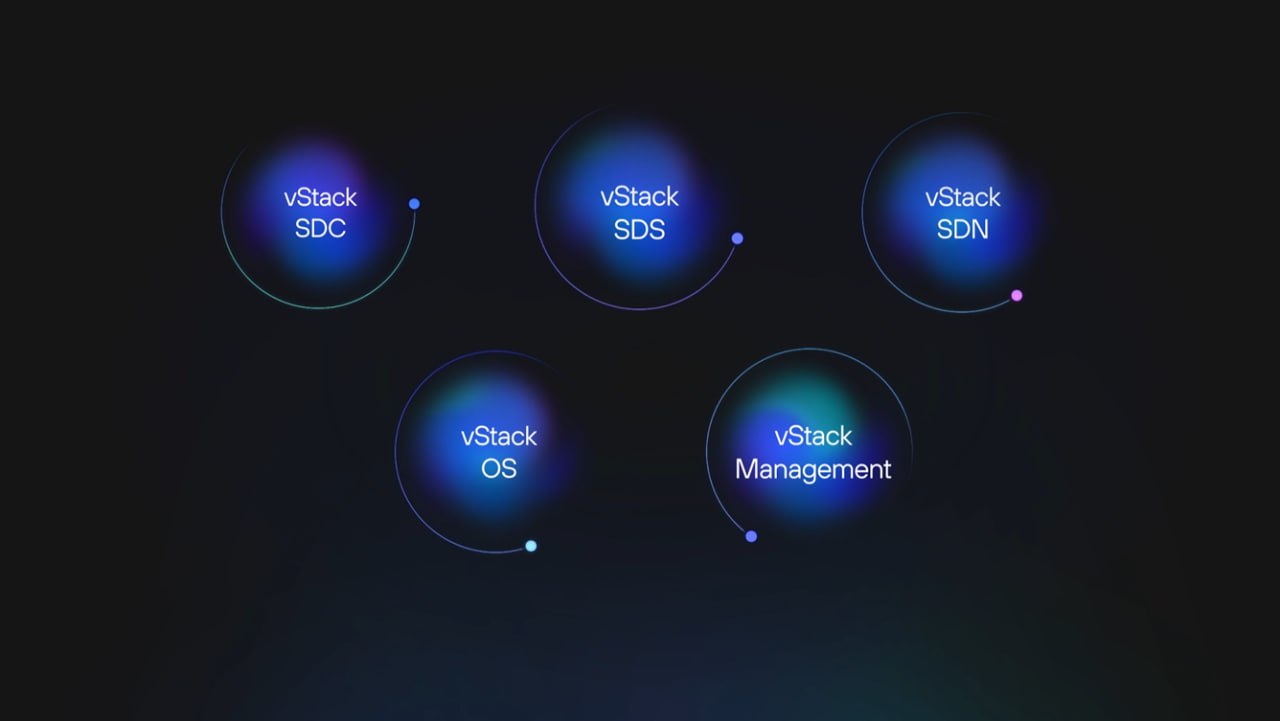
The vStack HCP platform is built on a software-defined architecture and includes five main components: vStack OS, vStack SDS, vStack SDC, vStack SDN, and vStack Management. Each of them is responsible for a specific layer of infrastructure — storage, computing, network, and management.
vStack SDS: Software-Defined Storage Layer
vStack SDS provides a software-defined storage layer with high availability, automatic recovery, deduplication, and compression. The system supports instant snapshots and can provide storage to external consumers via NVMe-oF and iSCSI. Additionally, it works flexibly with any disks, whether NVMe, SSD, or HDD, without being tied to a specific vendor.
vStack SDC: Software-Defined Computing Layer
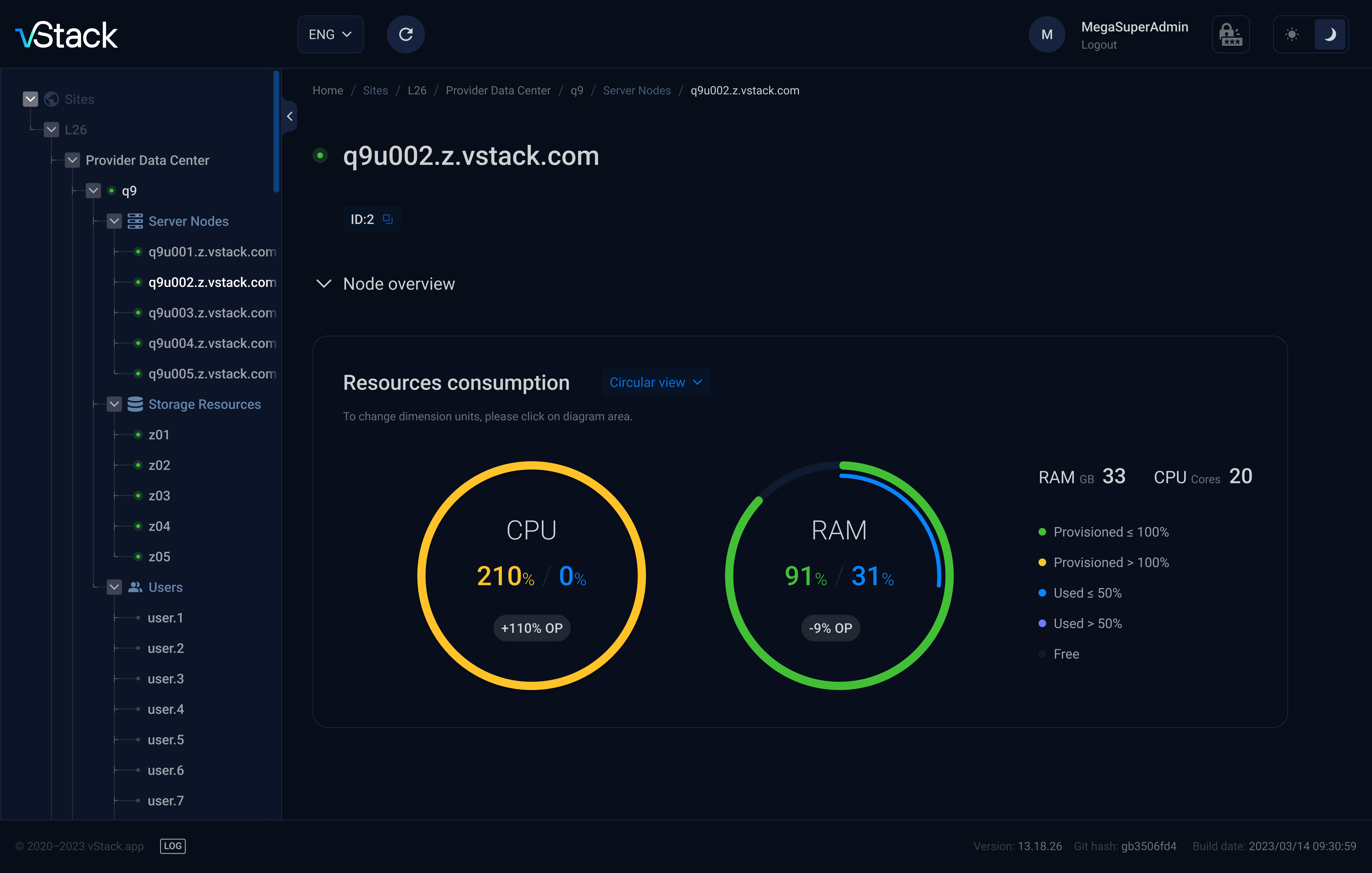
vStack SDC manages computing resources. The platform allows you to use overcommit vCPU up to 900% without performance loss, and it supports any guest OS, including Windows, Linux (including Astra and RedOS), and FreeBSD. Live VM migration ensures seamless transfer between nodes without service interruption, while built-in resource quotas and a lightweight hypervisor minimize overhead.
vStack SDN: Software-Defined Networking
vStack SDN is a software-defined network that provides secure traffic isolation, routable and isolated networks, efficient EDGE routers with NAT and Firewall, and centralized IP address management. The virtual port’s performance reaches 22 Gbit/s with 2.5 million packets per second.
vStack Management: Centralized Infrastructure Management
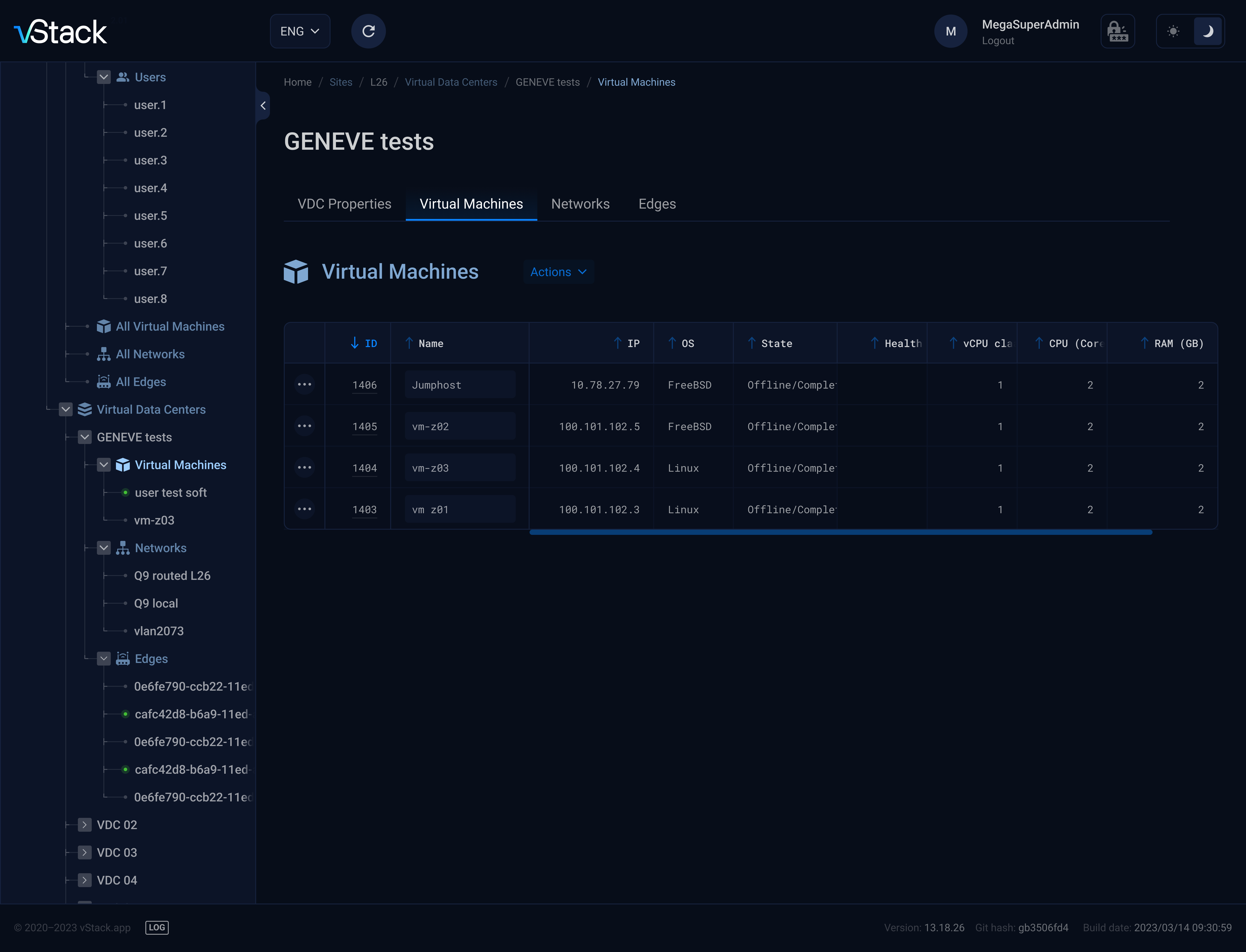
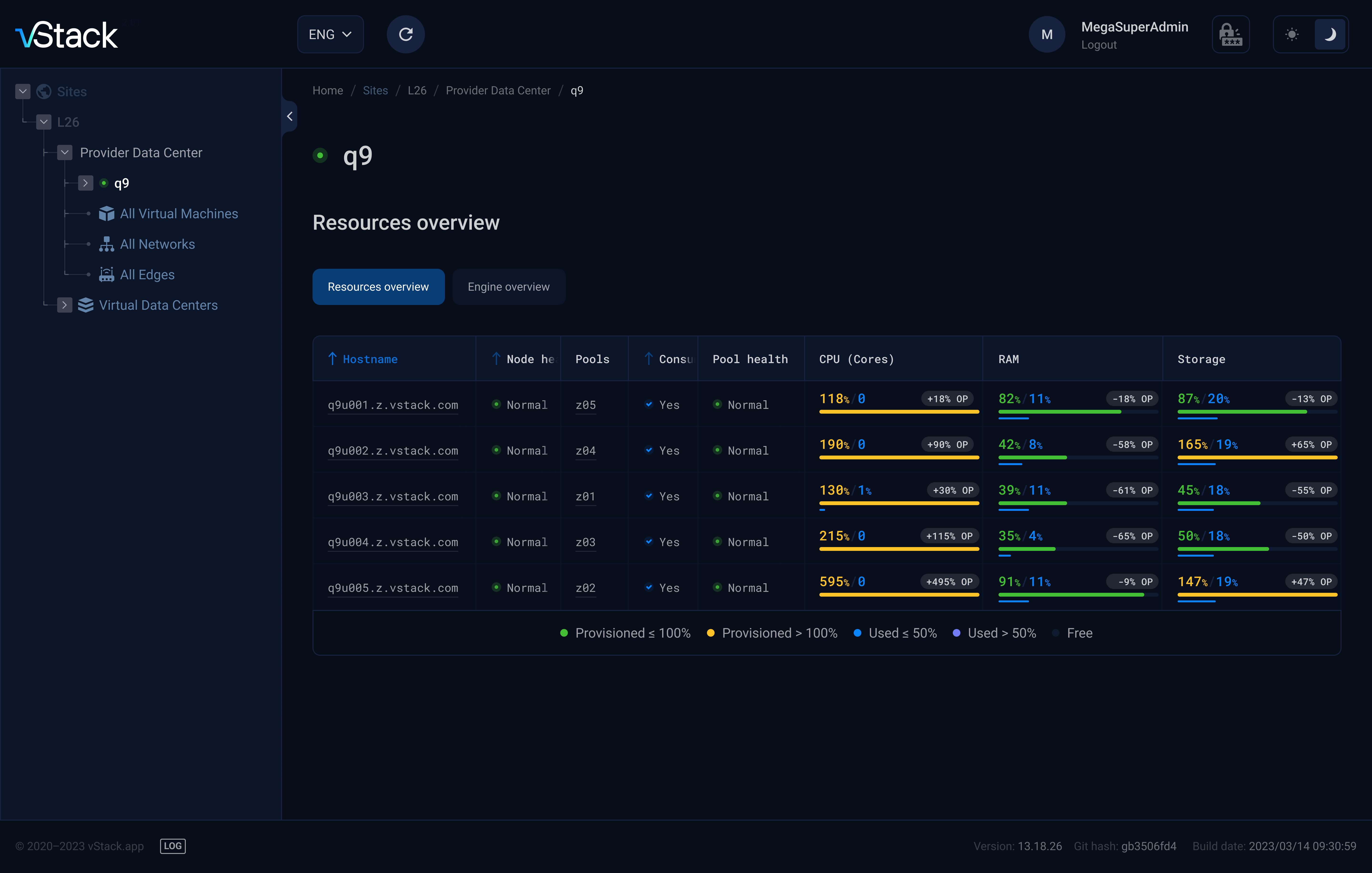
vStack Management provides a web interface and API for centralized management of the entire infrastructure, combining storage, compute, and networking into a single console.
Why Choose vStack: Benefits of vStack Hyperconverged Platform
The vStack platform differs from traditional solutions in several key areas.
- Independent from VMware: vStack is not an American product, eliminating risks of sanctions restrictions. On-premise licensing is available for customers building infrastructure for their own needs or subsidiaries, with a one-time purchase of processor licenses, without subscription.
- Proprietary and secure: Unlike KVM, Proxmox, or other open-source solutions, vStack is a fully proprietary product with clean code, eliminating custom modifications and viral license risks. Delivered as a boxed solution with unified management and 24/7 technical support, it allows fast and secure deployment.
- No vendor lock-in: vStack runs on standard x86 servers without expensive specialized storage or Fiber Channel, allowing full infrastructure management via a single console and easy scaling.
- Cost-effective virtualization: Lower license costs, reduced hardware requirements due to high efficiency, and minimal management overhead — all in one solution.
Conclusion: Flexible, Reliable, and Cost-Effective Virtualization with vStack
vStack combines flexibility, reliability, and cost-effectiveness. The platform is suitable for companies looking for a secure, independent, and ready-to-deploy solution for virtualizing their corporate infrastructure, with easy management and 24/7 support.
Get a consultation on vStack