

ITPOD storage systems
Compare enterprise hybrid and all-flash storage for cloud infrastructure and data-intensive applications. Choose a system based on usable capacity, throughput and application latency.
Hybrid or all-flash storage?
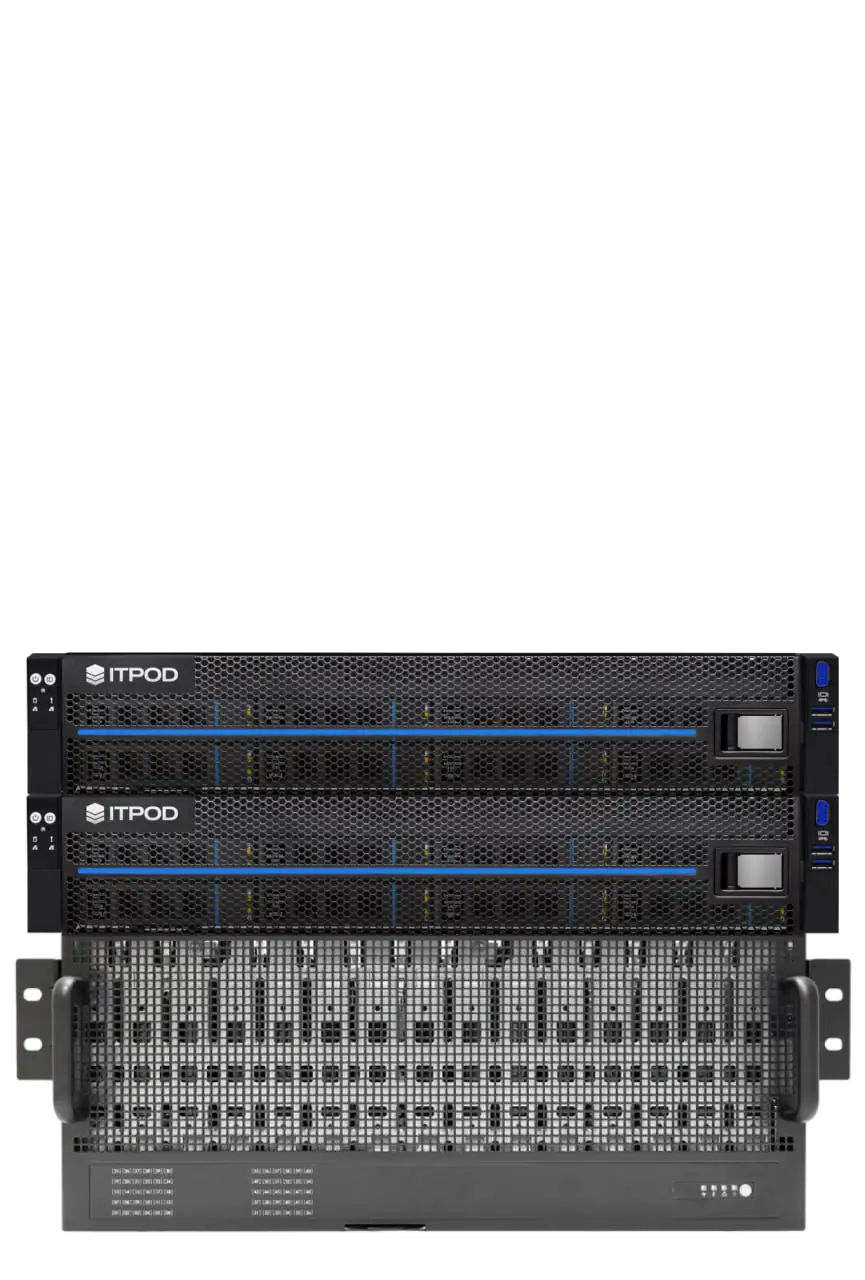
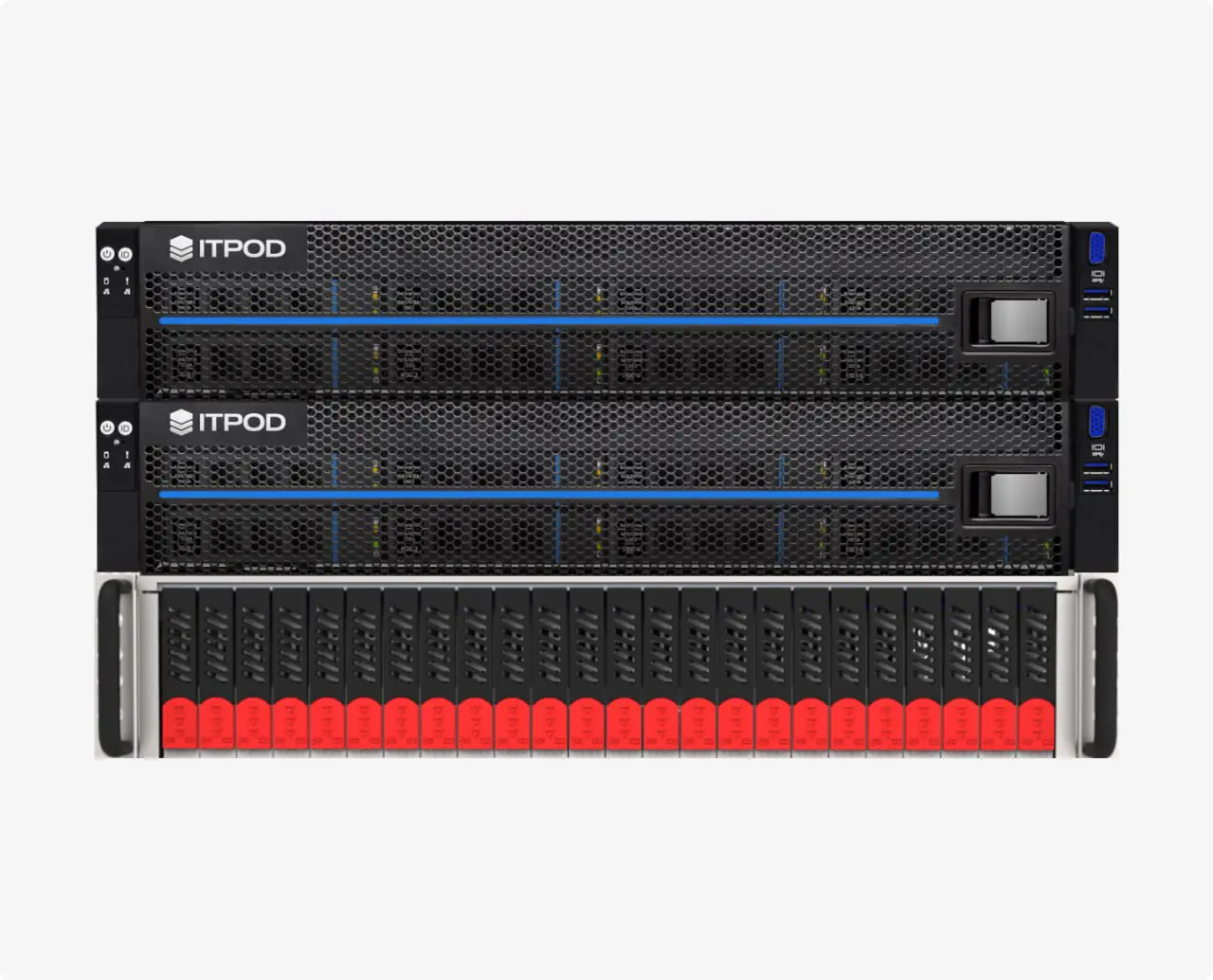
Choose Hybrid if you need HDD capacity and SSD caching in one system. Choose Full Flash for workloads that require the low latency of an all-NVMe array.
Data protection, performance and support
- Availability. Both families use active-active controllers and include built-in data protection features.
- Performance. Hybrid uses SSD read caching. Full Flash uses NVMe SSDs and supports NVMe/TCP.
- Capacity efficiency. Thin provisioning, compression and deduplication help manage physical capacity use.
- Support. ITPOD provides hardware and software support for its storage systems.
Frequently asked questions
What is the difference between ITPOD Hybrid and Full Flash storage?
Hybrid uses HDDs and SSDs, with SSD read caching for frequently accessed data. Full Flash uses NVMe SSDs throughout the array.
Does ITPOD Full Flash support NVMe/TCP?
ITPOD lists NVMe/TCP for Full Flash. Confirm the host connectivity and configuration when selecting a model.
Do both ITPOD storage families use active-active controllers?
ITPOD lists active-active controllers for both Hybrid and Full Flash.
Which data protection and efficiency features does ITPOD list?
The product catalogues list RAID-Z, snapshots, thin provisioning, inline compression and inline deduplication.
What information should I provide when requesting a storage configuration?
Share your usable capacity, workload, latency and throughput targets, host connectivity and expected data growth.