AI as New Industrial Revolution
Artificial intelligence is being compared to the technological revolution of the 18th and 19th centuries. Just as mechanization radically transformed industry back then, AI is becoming a driver of intelligent automation, transforming the economy, manufacturing, and everyday processes. Over the past year, the demand for AI computing power in Russia has tripled. Companies are forced to adopt and improve these technologies because it affects the competitiveness of the entire market. As a result, investments in infrastructure and AI solutions are increasing.
Many companies report that adopting AI leads to substantial operational efficiency gains — around 44% of organizations note cost reductions in business units where AI was deployed, with top performers often seeing costs drop by 10% or more. This reduction comes from automating routine tasks, optimizing workflows, streamlining supply‑chain or administrative operations, which lets businesses redirect resources toward growth.
At the same time, the MENA region is experiencing rapid expansion in AI adoption — the regional AI market was valued at USD 11.92 billion in 2023 and is expected to grow at a CAGR of 44.8% through 2030, reaching USD 166.33 billion.
Hardware vs Cloud: Battle for GPUs
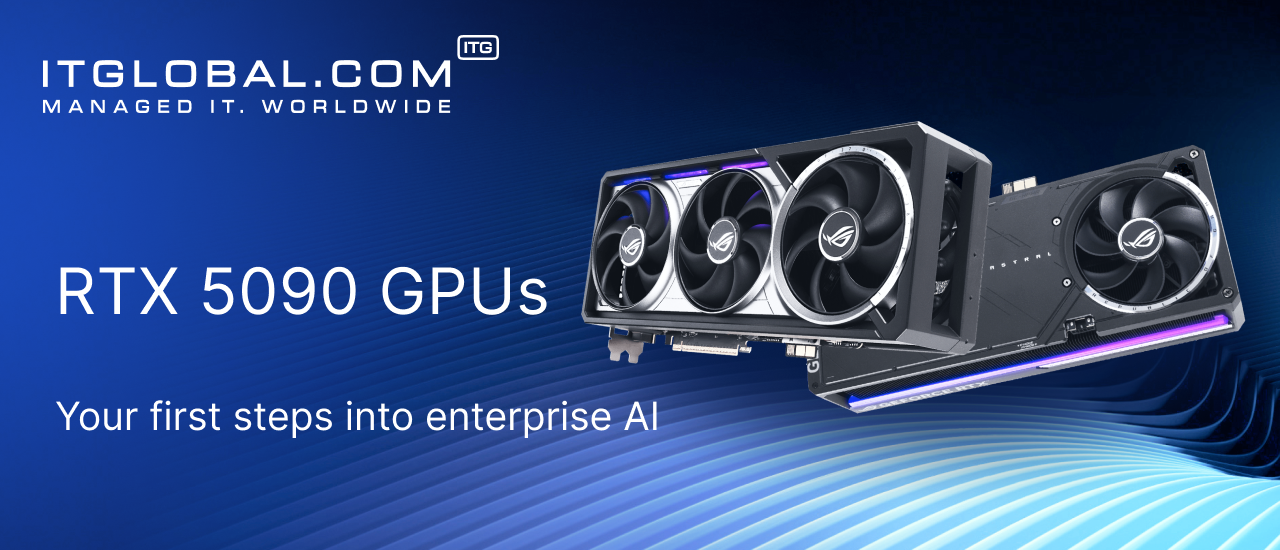
Artificial intelligence requires huge computing resources. Graphics processing units (GPUs) have become the basis for tasks that require high performance, from rendering in 3D modeling to machine learning and deep data analysis. It is estimated that by 2030, the UAE and broader MENA region will require tens of thousands of high-performance GPUs, such as NVIDIA A100/H200-class accelerators to meet the growing demand for AI infrastructure.
Buying your own equipment remains challenging: delivery times can be as long as 12–20 weeks, prices are high, and there are customs risks and integration difficulties. Additionally, companies often face the challenge of sizing, determining the appropriate amount of resources for their AI pilot projects, which can lead to inefficient investments.
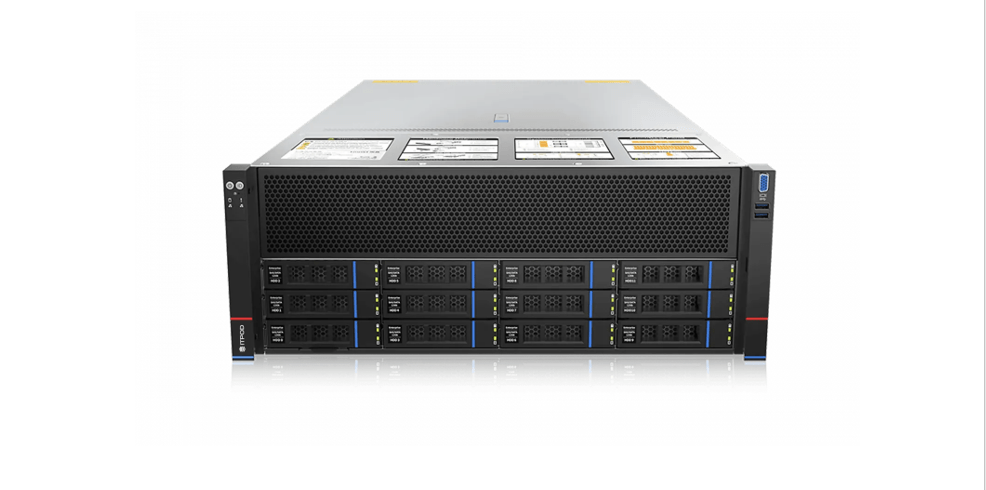
Renting capacity in the cloud or on dedicated servers solves these problems: capital costs are reduced and infrastructure is quickly available. Cloud servers are suitable for testing ideas and allow flexible scaling — from minimal configurations to clusters. Dedicated servers under constant loads give more control and security, and supercomputers like NVIDIA SuperPOD with GPU H200 (528 tensor cores and 141 GB of memory) are used for large AI projects — from language models to recommendation systems.
Modern solutions support technologies that improve the efficiency of GPU work. For example, NVIDIA MIG allows you to split a single graphics card into isolated segments without losing performance, while NVLink combines multiple GPUs into a single array with a total memory capacity of up to 564 GB. However, as the power increases, so does the heat generated, which is why data centers are switching to liquid cooling systems to ensure stable operation and scaling without the risk of overheating.
From Infrastructure to ready-made AI tools
The implementation of AI often faces challenges: it is necessary to determine what computing power is really needed, how to transfer data safely and how to scale the solution after the pilot phase. The answer is flexible cloud platforms, dedicated servers and consulting on process optimization.
AI Cloud solves this problem comprehensively, from infrastructure to ready-made tools. Companies get not only access to GPU power to train their own models, but also a set of proven AI services that can be implemented without hiring data scientists and long development:
- Hosting language models for creating chatbots and virtual assistants
- OCR services for automatic recognition and processing of documents
- AI secretaries for automating meeting recording and task control
- Anti-spam filters based on generative AI to protect corporate email
Integration of AI services into corporate systems is usually carried out through REST API and SDK. It is possible to connect to various systems, such as CRM, ERP, document management, and messaging systems. In the financial sector, automation is used for processing applications and documents. In retail, it is used for personalizing recommendations, and in manufacturing, it is used for predictive analytics of equipment.
When working with personal data, compliance with Federal Law No. 152 and the GDPR is required. Data processing is carried out in isolated circuits with encryption, and logging and auditing mechanisms are used. For tasks with high privacy requirements, models can be deployed in the client’s infrastructure. Legal support includes non-disclosure agreements and data processing.
This approach lowers the barrier to entry: small businesses can start with off-the-shelf services, while large companies can rent infrastructure to train their own models and then deploy them as services. AI Cloud combines the flexibility of cloud infrastructure with the practicality of off-the-shelf solutions, enabling companies of all sizes to effectively adopt artificial intelligence.
Meaningful AI Implementation for businesses
The experience of companies like Klarnet FinTech and IBM shows that attempts to replace humans with AI in tasks that require empathy and live communication often lead to failures. AI is effective as a tool for optimizing processes, but not as a substitute for human involvement. Therefore, successful implementation begins not with the purchase of a GPU, but with a well-thought-out roadmap. Companies must have a clear understanding of which processes need to be optimized, which metrics will be indicators of success, and which infrastructure will ensure scaling.
Practical scenarios: GPU applications
GPUs can be selected for specific business tasks and have measurable benefits. Let’s consider the impact of implementation on workflows using the following examples:
- Based on GPUs such as the NVIDIA A800, design studios can use Neural Radiance Fields for 3D interior visualization. This solves the problem of long lead times (2–3 days) and inconsistent quality of traditional rendering. The neural network generates a rough layout in 2 hours, increasing designers’ throughput by 280% and improving customer feedback.
- Manufacturing enterprises can implement security control systems on dedicated GPU servers, such as the NVIDIA L40S. Using YOLO v8 to analyze 45 cameras in real time, the system detects up to 97.8% of safety violations in 15 seconds, faster than an operator. This reduces the number of accidents by 52% and saves up to 12.5 million rubles per year.
Why adopt AI now
The adoption of AI has become a matter of competitiveness. Data security remains a key priority: modern solutions include isolated servers, crypto-gates and legal guarantees in the form of NDA, which minimizes the risks of leaks.
There’s no need to purchase hardware, hire AI specialists, or spend months on development. Ready-made services start working immediately after connection. Support is available 24/7, and the response time is as low as 15 minutes.
The cloud model allows you to start with a small budget and scale as your needs grow. Companies can flexibly manage their computing resources, increasing capacity for model training and then returning to basic settings to optimize costs.
Get a consultation on AI Cloud